Value in commercial real estate rarely sits on the surface. It is tucked inside leases, stitched into zoning bylaws, and shaped by how a property actually operates day to day. In Elgin County, Ontario, commercial building appraisers weigh all of that against data from St. Thomas, Central Elgin, Aylmer, Bayham, and the quieter townships that round out the county. A distribution warehouse on the south side of St. Thomas does not trade on the same terms as a mixed‑use building in Port Stanley, even if both measure the same square footage. The method matters, and so do the inputs.
This article walks through how commercial real estate appraisers in Elgin County determine value, the metrics they rely on, and the judgment calls they make when market data runs thin. It reflects the way practitioners, including commercial building appraisers Elgin County stakeholders often hire, actually work through a file, not a textbook sequence.
The local lens: why location granularity matters
Elgin County contains a wide spread of property types. St. Thomas has industrial and service‑commercial corridors tied to regional logistics and manufacturing. Port Stanley drives seasonal retail and hospitality. Aylmer and West Elgin see owner‑occupied shops that trade more on local cash flow than national covenants. On the edges, commercial land parcels sit adjacent to agricultural holdings where drainage, access to provincial highways, and servicing cost can swing value by meaningful margins.
Appraisers lean into that micro context. When a client asks for a value on a light industrial condo near the St. Thomas Airport, the best comparables might be a handful of recent unit resales from the same complex and two industrial condo trades near London that share similar condo fees, clear height, and unit depth. If the assignment is a lakefront inn with a pub in Port Stanley, the search often widens, using sales from Goderich to Kingsville to triangulate a capitalization rate that fits the tourist‑driven revenue profile. This local‑plus‑regional approach is typical for commercial real estate appraisers Elgin County relies on, because pure local data can be thin in any given quarter.
Standards and scope: what governs the work
In Ontario, designated appraisers practice under the Canadian Uniform Standards of Professional Appraisal Practice. Reports typically come in three flavors for commercial work, each with defined content requirements: short form for simple assignments with strong, recent comps, narrative for complex assets or when lenders ask for a full analysis, and updates that build on a prior file where little has changed. For financing, most lenders want a narrative or detailed short form with interior inspection, current rent roll, copies of leases, and photos that document condition.
Commercial appraisal companies Elgin County lenders and owners use will also align with bank‑specific scopes. A credit union may be comfortable with a desktop update when renewing a small mortgage on a well‑leased single‑tenant building. A Schedule I bank funding ground‑up development will require a narrative report with highest and best use analysis, cost estimates, and sensitivity testing. Multifamily financing that runs through CMHC adds its own rules, especially around stabilized expenses and vacancy.
Defining the subject: highest and best use is not a footnote
Every valuation turns on one idea: what is the most probable use that is legally permissible, physically possible, financially feasible, and maximally productive. In Elgin County, that analysis can nudge value in subtle ways.
A one‑storey retail building in Aylmer with deep lot depth might have value as it sits, but if the zoning permits a second storey with apartments, and the market rents support the extra cost, the highest and best use could be mixed‑use, as improved. If the structure is obsolete and the soil can bear a new build economically, the highest and best use may be redevelopment, as vacant. Commercial land appraisers Elgin County engages do this work often, parsing Official Plan designations, zoning bylaws, site‑specific provisions, and servicing capacity before deciding which path yields the defensible value.
Gathering the right evidence
Good valuations start with facts on the property and comparables, not assumptions. For a typical assignment, the file build includes title documents, surveys or site plans, zoning confirmations, assessed values, tax bills, building permits, environmental reports if any, and a detailed rent roll. Photos tell a story tied to condition and functionality: roof age, parking layout, loading doors, eaves height, elevator service, and barrier‑free access.
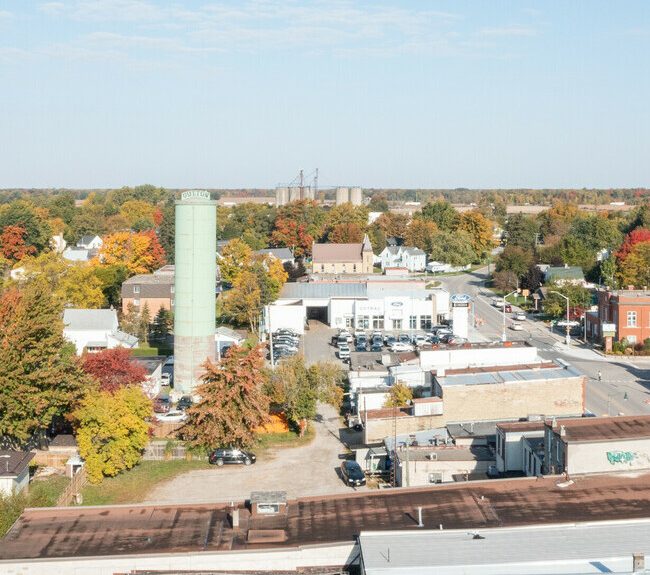
On the market side, appraisers pull recent sales and listings from local brokerages, MLS, and subscription databases. They call brokers to clarify seller motivations or tenant quality, because a sale with vendor take‑back financing or a short lease term can skew a headline price. For income data, they confirm market rents with landlords and managers handling similar stock. When data is sparse, they broaden the radius to London, Woodstock, or Chatham, then adjust back for Elgin County https://emilianohast535.image-perth.org/commercial-real-estate-appraisal-methods-explained-for-elgin-county-owners dynamics.
The three classic approaches, used with judgment
When people talk about commercial building appraisal Elgin County owners receive, they usually mean one or more of these methods, applied to the asset at hand and reconciled into a final estimate of value.
- Income approach: Capitalization or discounted cash flow for income‑producing real estate Direct comparison approach: Sales comparison with market‑derived adjustments Cost approach: Replacement cost new minus depreciation, plus land value
Not every approach fits every property. An owner‑occupied service garage with unique improvements might lean heavily on the cost approach, cross‑checked by sparse sales. A leased multi‑tenant plaza will usually rest on the income approach, with a reality check from the sales of similar plazas. Seasoned commercial building appraisers Elgin County depends on will make that call early, then let the stronger approaches carry more weight in reconciliation.
Income approach: building a credible NOI and cap rate
With leased assets, the income approach is often central. Appraisers first normalize the net operating income, then apply a capitalization rate drawn from the market.
On the income side, the work is more than plugging in a rent roll. Market rent may differ from contract rent. If a unit is leased below market to an affiliate, the appraiser may underwrite at market upon rollover, then stabilize. Vacancy is set to a market allowance that reflects local experience. In St. Thomas for small‑bay industrial, stabilized vacancy might sit around 3 to 6 percent in a tight year, then flex higher in a softer period. For older downtown retail, a prudent vacancy allowance might run 5 to 8 percent depending on depth of demand and unit size.
Expenses are treated consistently. A true triple‑net lease shifts most controllable costs to tenants, but landlords usually retain structural repairs, some insurance responsibilities, and management oversight. Appraisers still underwrite a management fee, often 2 to 4 percent of effective gross income, even if an owner self‑manages, because the market expects that expense on resale. Reserves for tenant improvements and leasing commissions are baked in for multi‑tenant properties. Property taxes are trued up to current rates, then normalized to reflect the market assessment, not a temporary appeal effect unless the appeal is permanent.
The cap rate is where experience pays off. In Elgin County, cap rates for stable, small‑format retail or light industrial often land a bit higher than in the core of London, reflecting slightly lower liquidity. A single‑tenant building with a five‑year lease to a local covenant might justify a 7.0 to 7.75 percent range, while a multi‑tenant industrial building with diverse small bays and minimal rollover risk might trade tighter, say mid‑6s to low 7s, depending on quality, clear height, and loading. Hospitality and seasonal assets often carry a higher cap rate to account for revenue volatility. Appraisers do not guess. They cite recent local and regional sales with verified in‑place NOI, then adjust for differences in lease term, covenant strength, unit mix, and physical risk.
When lease expiries cluster, a simple direct cap can mislead. That is when a discounted cash flow makes more sense. The DCF models rent step‑ups, downtime between tenants, realistic tenant improvement costs, and leasing commissions through a hold period, typically 5 to 10 years, then discounts those cash flows at a rate consistent with investor return requirements. In a county market, the discount rate might sit 100 to 200 basis points above prime urban cores, again depending on asset quality and tenant mix.
Direct comparison: getting adjustments right
The direct comparison approach compares the subject to recently sold properties, then adjusts the sale prices to estimate what those comparables would have sold for if they were identical to the subject. The fewer the comparables, the more care each adjustment needs.
Key adjustment categories include location, building size and utility, age and condition, site coverage and parking, lease terms if the asset was sold leased, and any non‑cash considerations. A 20,000 square foot industrial building that sold in south London at 125 dollars per square foot might equate to 110 to 120 dollars per square foot in St. Thomas if the subject has lower clear height and only grade‑level loading. A main street retail property in Port Stanley that sold in August might need a seasonality lens. Was the sale negotiated in May at the start of high season or in January when foot traffic dipped? The appraiser reconciles these factors into a tight set of paired‑sales style adjustments, then sizes their confidence accordingly.
Cost approach: where replacement and obsolescence meet
The cost approach asks what it would cost to build the property today, then subtracts depreciation, and adds land value. It is most persuasive when the improvements are newish, special purpose, or the market has very few rent‑producing comparables.
For a modern, 15,000 square foot pre‑engineered metal industrial building in Central Elgin, replacement costs might be built up from current hard costs per square foot, plus soft costs like design, permits, and development charges. Land value comes from sales of comparable industrial lots, adjusted for servicing and exposure. Depreciation gets three legs: physical wear, functional issues like low clear height or obsolete mechanicals, and external factors such as adjacency to a nuisance use or long‑term market decline in that sub‑sector. In this county, external obsolescence might include traffic pattern changes after a highway improvement that reduced pass‑by exposure for a retail‑oriented site.
Why the cost approach still matters for land‑heavy assets
Commercial land appraisers Elgin County relies on use the cost lens in a different way. For partially improved sites or redevelopment candidates, they often value land directly via sales, then run feasibility checks to see if the improved value less cost to build and profit supports that land value. If not, either the land sale comparables need re‑sorting, or the project is not financially feasible at that price point.
The metrics that move the needle
Several inputs tend to swing value more than others, particularly in income‑based valuations. A few deserve special attention in Elgin County.
Market rent vs. Contract rent. If a property is leased to a related company at below‑market rent, buyers will almost always underwrite to market upon renewal. Appraisers test contract rates against recent deals in comparable units, then consider inducements and tenant improvement packages common in that segment.
Vacancy and downtime. A healthy long‑term vacancy allowance can differ from current conditions. Even with low vacancy today, a prudent allowance buffers against normal churn. Multi‑tenant assets with small suites often carry shorter downtime between tenants but higher turnover.
Capital expenditures. Roof age, parking lot condition, and HVAC replacement cycles should translate into reserves or near‑term capital items in the cash flow. A 60,000 dollar roof due in two years does not vanish because last year’s NOI looked good.
Expense recoveries. In triple‑net structures, caps on operating cost recoveries or unusual exclusions can erode NOI over time. Professional review of leases helps reveal where recoveries diverge from market norms.
Cap rate selection and evidence. Two otherwise similar strip plazas can separate by 50 to 100 basis points on cap rate due to tenant mix. National covenants and long remaining terms compress rates. Local covenants with upcoming renewals widen them.
Zoning and planning: quiet drivers of commercial land value
On raw or redevelopment land, planning context can outmuscle everything else. Appraisers read official plan maps, secondary plans, and zoning bylaws, then call municipal staff to confirm interpretations. Full municipal services versus partial servicing or private systems, frontage on a county road versus a local street, and required setbacks under a site‑specific bylaw all alter usable area and cost to develop.
In Elgin County, parcels near new residential growth nodes command premiums if they are designated for commercial or mixed‑use and have reasonable servicing costs. Conversely, rural commercial sites without immediate access to utilities may price largely on exposure and permitted uses like contractor yards or highway commercial, with value tempered by the cost of well, septic, and stormwater solutions.
What lenders expect to see
For financing, lenders want clarity on income durability, market support for key assumptions, and risks that could change value. A good report from commercial appraisal companies Elgin County lenders recognize will include:
- A clean rent roll with start and expiry dates, options, rent steps, and recovery terms Market rent support drawn from recent leases and broker testimonials Sensible vacancy, management, and reserve allowances aligned with market practice Cap rate support from verified sales with commentary on lease quality Notes on environmental risk, building condition, and upcoming capital items
That evidence gives underwriters the confidence to size loans and set covenants. It also helps borrowers spot value levers they can pull before a refinance, like extending a key tenant or addressing deferred maintenance.
Edge cases and judgment calls
Not every file is tidy. A few patterns recur.
Mixed revenue sources. A marina with boat slips, storage, fuel sales, and a restaurant is multiple businesses stitched into one real estate. Appraisers separate real property income from operating business profit, then capitalize only the real estate component, or they use a stabilized EBITDA allocation method where market practice supports it.
Owner‑occupied with specialized improvements. A food‑processing plant with drains in place and specialized power can hold value above a generic shell for a buyer in the same industry, but much lower for general buyers. The appraiser weighs market depth for that specialization and often brackets value with cost and sales of generic space.
Short data runs. In a quiet quarter, there may be few local trades. Appraisers widen the net and lean harder on adjustments, then are transparent about confidence levels. A well‑written narrative will say so plainly.
Three short vignettes from recent cycles
A small‑bay industrial in St. Thomas. A 28,000 square foot multi‑tenant building with 16‑foot clear and four grade doors, mostly local trades tenants. Rents signed last year at 10.50 to 11.50 dollars per square foot net. Stabilized vacancy underwritten at 5 percent, expenses mostly recovered but a modest structural reserve included. Verified sales in Elgin and south London indicated cap rates between 6.5 and 7.0 percent for similar tenancy and age. The reconciled cap rate landed at 6.75 percent, which, on a normalized NOI, produced a value range that matched lender expectations. A DCF showed similar results, even with two near‑term lease rollovers.
Main street retail with apartments in Port Stanley. Ground‑floor retail saw strong summer trade but lower winter demand. Second‑floor apartments were consistently full. The appraiser normalized the retail rent to an annualized figure reflecting seasonality, set apartment rents to market, used an 8 percent blended vacancy for retail and 3 percent for residential, and chose a cap rate in the low 7s given the mixed income profile and smaller scale. Sales from other lakeside towns, adjusted for distance and tourism intensity, anchored the rate.
Highway commercial land at the edge of Aylmer. Two acres designated highway commercial with partial services at the lot line. Sales of similar parcels suggested a broad range due to servicing uncertainty. The appraiser confirmed with the municipality the timing and cost share for full servicing, then adjusted land value downward to reflect on‑site stormwater and interim servicing needs. A residual test, using a prototypical gas‑convenience build, supported the conclusion.

Preparing for an appraisal: a practical owner checklist
- Current rent roll, all signed leases, and any pending offers to lease Last two years of operating statements, with a breakdown of recoverable vs. Non‑recoverable expenses Details of recent capital work: roofs, HVAC, paving, life safety systems A site plan or survey, plus any zoning or minor variance decisions Contact information for the property manager and key tenants for verification
Providing this at the outset shortens timelines and sharpens the result. It also lets commercial building appraisers Elgin County owners hire spend time on analysis, not document chasing.
Choosing the right partner in a county market
Not all firms have the same depth across asset types. When vetting commercial appraisal companies Elgin County businesses rely on, look for a track record in your property type and municipality. Ask how they source local lease and sale data, how they handle thin‑market adjustments, and whether a senior appraiser will inspect the property. For development land, confirm they will engage with municipal staff about servicing and planning, not just read bylaws. For specialty assets, ask how they separate real estate value from business enterprise value. The answers matter more than the lowest fee quote.
Timelines, fees, and what shifts them
A straightforward single‑tenant building with a clean lease and recent comparable sales can be turned around in roughly 10 to 15 business days once documents are in. Multi‑tenant properties with missing leases or verification hurdles can push longer. Complex assignments such as hotels, marinas, or development land needing planning confirmation may run three to five weeks, sometimes more if third‑party reports are required.
Fees track complexity. Small, simple commercial buildings often fall in the low thousands. Multi‑tenant or specialized assets typically cost more. Land with uncertain servicing can rival the cost of a complex improved property due to the planning and feasibility analysis required. Rushing the timeline usually carries a premium, and some lenders will not accept rush work if verification looks thin.
The through line: reconcile methods and stay transparent
Valuation is part math, part market reading. The math keeps you honest. The reading captures what a buyer will pay and a lender will fund in this specific county, for this specific asset, under today’s conditions. Commercial building appraisers Elgin County owners and lenders trust combine the income, comparison, and cost approaches, then reconcile them with clear reasoning. When the methods point to a tight range, confidence is high. When they diverge, the appraiser explains why and weights them accordingly.
If you are preparing a property for refinance or sale, invest early in the value levers that matter. Clean up lease documentation, smooth out near‑term rollover risk where you can, tackle deferred maintenance that will become a reserve line in the appraisal, and gather the records that prove your case. When the file lands on an appraiser’s desk with that groundwork in place, the appraisal moves faster and the result better reflects what your property is truly worth.
A final word on context. Markets shift. Cap rates move with interest rates and risk sentiment. Industrial demand can cool or heat in a span of quarters. Good appraisals timestamp their assumptions and cite the sales and leases that justify them. That is what you should expect from commercial real estate appraisers Elgin County depends on, and it is the best way to ground major decisions in numbers that hold up under scrutiny.