Walk a block in downtown Sarnia at lunch and you hear it in the conversations outside coffee shops. A logistics operator looking for a bigger warehouse close to Highway 402. A medical user debating a move to a newer building with better parking. A plant manager pricing out an expansion, wondering whether the lender will meet the deadline. Beneath those decisions sits a single question, what is the property worth today. In a county as varied as Lambton, with petrochemical clusters, small town main streets, and tourism along Lake Huron, the drivers of value do not travel in a straight line.
Over years working with owners, lenders, and municipalities across the county, the pattern repeats. The same core variables show up in nearly every commercial real estate appraisal in Lambton County, but the weight of each changes block by block. A retail pad on London Road does not behave like a fabrication shop in Corunna or a motel in Grand Bend. The job of the commercial appraiser in Lambton County is to sort those variables, test them against real market evidence, and deliver a value that can stand up to scrutiny.
The local market lens matters more than any model
You can import a national cap rate survey and still miss the mark if you ignore cross‑border trade through the Blue Water Bridge, the petrochemical supply chain in Chemical Valley, and the seasonality that shapes Lambton Shores. Value is local. Property type, tenant profile, and block‑by‑block demand matter, but in this county, so do three structural forces.
First, logistics and manufacturing tie directly to the Sarnia - Port Huron crossing and Highway 402. Shorter haul times and predictable customs processing have real rental value to certain occupiers. Second, heavy industry clusters near the St. Clair River create specialized demand for yard space, overhead cranes, power capacity, and high clear heights. Third, tourism and retirement migration influence retail and service uses along Lakeshore Road and in towns like Grand Bend and Petrolia, pushing different rent and vacancy dynamics than you see in Sarnia’s industrial pockets.
An experienced commercial appraiser in Lambton County will weigh those undercurrents before choosing the valuation approach and the right comparables.
Income, comparison, and cost, used with judgment
Every commercial property appraisal in Lambton County leans on three classical approaches, but not equally.
- The income approach carries the most weight for leased investment properties, from multi‑tenant retail to medical offices and newer industrial condominiums. The appraiser normalizes rent to market, deducts vacancy and non‑recoverable expenses, and capitalizes the stabilized net operating income. Depth of lease data is thinner here than in Toronto, so the analysis often blends recent local deals with carefully adjusted evidence from nearby markets like Chatham‑Kent, London, and Windsor. The judgment call is how far to reach while still reflecting Lambton’s risk profile. The direct comparison approach is powerful when you have enough arm’s‑length sales of similar assets. In Lambton, that is practical for small commercial buildings, mixed‑use main‑street product, and standard industrial boxes. For special‑purpose assets, pure comparison is harder, but you still look at land value and shell equivalents as anchors. The cost approach often supports appraisals for special‑purpose or owner‑occupied industrial buildings, institutional assets, and newer construction where depreciation is estimable. Replacement cost new can be triangulated with contractor quotes and published guides, then adjusted for functional and external obsolescence. In a county with older industrial stock and localized environmental factors, external obsolescence calls for sober analysis, not rules of thumb.
None of these approaches produce truth on their own. Strong valuation work triangulates, then reconciles to the most defensible indication based on the property’s economics and the reliability of each data set.
Rent, vacancy, and operating risk
The rent roll is the heartbeat of income value. In Lambton County, headline rent is only the start. Appraisers drill down into several elements that materially move value.
Effective market rent. Asking rents can overstate reality in a smaller market where landlords test the waters. Appraisers peel back inducements and free rent to reach a true economic rent. For industrial, older small‑bay space with limited loading or low clear heights usually trails newer product by a material margin. Retail inline units along high‑traffic corridors, such as London Road or Confederation, show a different profile than side‑street locations in Wyoming or Oil Springs.
Vacancy and downtime. A 0 percent vacancy in a single building does not eliminate leasing risk. The appraiser looks at submarket vacancy, recent absorption, and tenant rollover timing. A multi‑tenant plaza with two leases expiring in the same year deserves a longer downtime assumption and higher lease‑up costs, especially if the units lack modern HVAC or visibility.
Expense recoveries. Triple net language varies widely in older Lambton County leases. Some legacy leases cap controllable expenses or exclude certain repair items. Those carveouts directly reduce net operating income. In main‑street mixed‑use buildings, residential components follow different legal frameworks, so you cannot assume full pass‑throughs across the board.
Credit and concentration. A single industrial tenant tied into the petrochemical supply chain may pay on time and take immaculate care of the premises, but if 100 percent of the income hinges on one covenant, that concentration risk pushes the cap rate up unless the lease term and security are rock solid. A strip plaza with ten local service tenants spreads risk, yet may have shorter leases and higher turnover. Appraisers weigh which risk profile the market prefers in that moment.
Short anecdote. A few years back, a 20,000 square foot warehouse near Courtright carried a rent slightly below what newer listings suggested. The owner assumed the appraisal would key off advertised rents. The rent roll told a different story, a triple net lease with a partial roof exclusion and an early termination right. The appraised value followed the contract income with a measured adjustment to market at rollover, not the rosier listing expectations.
Cap rates that fit the street, not the spreadsheet
Cap rates in Lambton County do not move in lockstep with national headlines. They react to the depth of buyers willing to chase a given asset class locally and to perceived illiquidity. Two similar buildings can trade 75 basis points apart based on tenant quality, lease length, specialized build‑outs, and location micro‑factors like truck access or signalized intersections.
When a commercial appraiser in Lambton County sets the capitalization rate, the file usually contains three kinds of evidence. First, closed sales with verified rents. Second, broker‑verified offers and buyer feedback on current listings, adjusted for the inevitable listing optimism. Third, corroborating indicators like debt coverage tests from lenders active in the county. If a property does not pencil at the indicated cap rate for the typical bank’s underwriting, that is a red flag.
Industrial and logistics assets near major arterials can command tighter cap rates if they feature long leases to durable covenants. Older single‑purpose buildings with environmental hair or functional issues trade wider. Small town retail with strong local service tenants, the pharmacy, the grocer, the bank, can trade at surprisingly firm yields when supply is thin. Each pattern has flipped at times when a large owner liquidated or a major tenant exited, which is why local transaction memory matters.
Location within the county, more than a pin on a map
The phrase location is shorthand. In Lambton County it breaks down into access, visibility, adjacent use compatibility, and future planning.
- Sarnia and Point Edward. Proximity to the Blue Water Bridge and Highway 402 reduces haul times and builds value for logistics users. London Road and Exmouth Street corridors have established retail draws, increasing footfall and tenant demand. Riverfront sites trade with a premium for visibility and future redevelopment potential, subject to floodplain and hazard setbacks. St. Clair River corridor. Industrial and marine‑related uses value deep yard space, crane access, and utility capacity. Properties in Corunna and Courtright often serve specialized tenants. Compatibility with adjacent heavy industry can be a plus for those users, but a minus for office or medical. Lambton Shores and inland towns. Seasonality affects retail and hospitality, with higher summer foot traffic in Grand Bend. Appraisers adjust stabilized income for off‑season performance to avoid overvaluing peak‑season cash flow. Rural and highway sites. Exposure along Highway 402 interchanges can benefit automotive, quick service restaurants, and travel‑oriented uses, yet access design and signage rights determine whether that exposure converts to rent.
Municipal planning and zoning, from Sarnia’s official plan to Lambton Shores’ shoreline management policies, affect what is permissible today and what might be possible in five years. A commercial property appraisal in Lambton County that ignores zoning overlays or hazard mapping is one surprise away from a value miss.
Land use controls and approvals, the quiet value gates
Buyers and lenders keep asking the same questions, can I use it as intended, can I expand, and what might stop me. Appraisers read the same tea leaves.
Zoning. Is the current use legal conforming, legal non‑conforming, or out of step with the by‑law. A legal non‑conforming use can operate for years, yet the inability to rebuild to the same use after substantial damage suppresses value and insurability.
Setbacks, parking, and loading. Older main‑street buildings may be short on on‑site parking, pushing reliance on street or municipal lots. Industrial properties with insufficient truck maneuvering can sit vacant longer between tenants, a real economic penalty.
Development charges and CIPs. Municipalities within Lambton County have used Community Improvement Plans to spur brownfield cleanup or downtown refresh. Incentives do not automatically raise value, but they can improve feasibility for expansions or renovations, which in turn affects highest and best use. Appraisers note the presence and reliability of such programs, then discount for administrative risk and timing.
Hazard and floodplain mapping. Portions of the St. Clair and Lake Huron shorelines carry hazard designations that limit intensification. The practical effect is that redevelopment scenarios require careful modeling. A coastal asset with breathtaking views might still be pinned down by setback and dynamic beach hazard rules, which suppress the redevelopment premium.
Age, construction quality, and the invisible systems
Two industrial buildings can look similar from the street and value very differently once you step inside. In Lambton County’s older stock, what you cannot see often drives appraisal adjustments.
Power and utilities. Tenants tied to the petrochemical supply chain may require higher amperage and redundancy. A building with 600 volts and modern switchgear leases faster and at higher rents than one with dated panels. Water, sewer, and gas capacity matter just as much. Rural properties on well and septic can carry operational limitations that deter medical or food‑grade users.
Clear height and loading. Logistics users often pay for height and dock doors. A 16 foot clear height building with grade‑level loading competes in a different pool than a 28 foot warehouse with multiple docks. The rent delta is not linear, but it is consistent.
Fire protection and code compliance. Sprinklered space broadens the tenant pool and lowers insurance costs. Buildings that have not kept pace with Ontario Building Code changes may need capital upgrades at lease rollover. Appraisers fold expected capital and compliance costs into stabilized expense and reserve allowances, which reduces net income and value.
Functional obsolescence. Some facilities were built for a single user with fixed process equipment. Unless there is a ready replacement tenant, the market will discount for the cost and time to backfit. You can see this in older labs, specialized manufacturing lines, and even office buildings with odd floorplates or limited natural light.
Environmental conditions, the elephant in the room
Nearly every commercial appraiser in Lambton County has a story about a property that lost a deal over environmental risk. Heavy industry has powered the local economy for decades. It also leaves a legacy that must be assessed and quantified.
Phase I and II ESAs. Lenders commonly require at least a Phase I Environmental Site Assessment. If the report flags recognized environmental conditions, a Phase II with sampling follows. Appraisers do not guess at contamination, they reflect third‑party reports and the market’s reaction to them. A clean Phase II can restore dealability. A confirmed plume reduces marketability and value until remediation is complete or fully costed and escrowed.
Underground storage tanks and TSSA compliance. Former service stations and industrial sites with fuel systems raise flags. Even decommissioned tanks create perceived risk. Properties with current Technical Standards and Safety Authority documentation and clear closure reports trade materially better.
Neighbouring uses. Off‑site sources can affect on‑site risk. Proximity to historical operations, even across the street, can show up in buyer due diligence. Appraisers familiar with local industrial history can anticipate those concerns and weigh them appropriately.
External obsolescence. When environmental stigma persists despite remediation, the result is often external obsolescence, a deduction in the cost approach and a higher cap rate in the income approach. The key is support. Numbers must tie back to market evidence, not fear.
Market evidence is thinner, so verification counts twice
Compared to larger metros, Lambton County produces fewer trades per asset class each year. That scarcity does not make appraisal impossible, but it raises the premium on verification and appropriate adjustments.
Sales selection. The best comps are recent, local, and similar. When the market will not give you all three, something has to give. If you reach to London or Windsor for industrial sales, you then adjust for rent levels, buyer pools, and illiquidity. An experienced commercial appraisal service in Lambton County will pick fewer, better comps and spend more time on the adjustments rather than pad the report with marginal data.
Lease data. Private deals dominate. Local brokers, property managers, and owners share ranges, not glossy league tables. Appraisers treat quotes carefully, separating well‑negotiated leases from placeholders. When a lease includes above‑standard tenant improvements, rent must be normalized.
Cost checks. Construction cost inputs vary month to month. For a commercial building appraisal in Lambton County that leans on the cost approach, triangulating published guides with current contractor pricing is vital. Steel, electrical, and HVAC have moved enough in recent years that a stale cost input can flip a value conclusion.
What lenders, tax appeals, and buyers weigh differently
The same property can receive different valuations across use cases because the definition of value and the risk tolerance change.
Financing. Lenders prize sustainable cash flow and downside protection. They lean on debt coverage ratios, recast income conservatively, and highlight concentration and rollover risk. The appraiser’s stabilized income and cap rate need to survive that stress test.
Acquisition. Buyers often model upside. If a retail plaza is 70 percent leased at below‑market rents, a buyer’s pro forma might land above the appraised stabilized figure. That is not a conflict, it reflects different purposes. The appraisal’s job is to state today’s market value, not a hoped‑for post‑leasing outcome.
Tax assessment appeals. MPAC values land and buildings for taxation using mass appraisal, not the bespoke analysis in a fee appraisal. When owners challenge assessments, the arguments often hinge on income profiles and obsolescence that MPAC’s model may miss. A detailed commercial property appraisal in Lambton County can supply the grounded evidence needed to correct an over‑assessment.
Insurance. Replacement cost for insurance differs from market value. It excludes land and includes demolition, debris removal, and code upgrades. The cost approach is adapted for that purpose. Owners sometimes conflate the two and expect parity, which almost never exists.
Anecdotes from the field, why two properties diverged
A small‑bay industrial condo in Sarnia and a freestanding shop in Petrolia both showed net rents in the same ballpark. The condo, however, sat in a complex https://raymondnbqf388.theburnward.com/avoiding-common-mistakes-in-commercial-real-estate-appraisal-in-lambton-county with controlled access, modern sprinklers, and a healthy reserve fund. The freestanding shop had older electrical, a partially gravel yard, and a roof near end of life. One traded at a tighter cap with minimal lender pushback. The other needed a roof holdback and priced 100 basis points wider. Rent parity did not save the second asset, the capital plan did.
On the retail side, two strip plazas built in the same decade told different stories. The first sat at a busy, signalized corner with full turning movements and a stable anchor. The second tucked behind a larger box store with limited curb cuts and a pylon sign partially obscured by trees. Even with similar in‑place rents, renewal probabilities and re‑leasing times differed. The appraisal on the first supported a firmer yield and lower downtime assumptions. The market rewarded what looked like minor site design differences.
Practical steps owners can take before the appraisal
- Assemble the last three years of income and expense statements, current rent roll, and copies of all leases with amendments and inducement details. Provide recent capital expenditures, roof and HVAC ages, sprinkler certifications, elevator and life safety test records, and any warranties. Share planning and zoning confirmations, surveys, site plans, and any variances or legal non‑conforming status letters. Supply environmental reports, even if older, and any TSSA or tank decommissioning documentation. Note any pending negotiations, tenant notices, or material events that could change income within the next 12 months.
Those documents let the commercial appraiser in Lambton County move faster and reduce guesswork. Surprises rarely help value. Transparency, even about warts, leads to a more credible conclusion and often a smoother lending process.
Highest and best use, not the last use
Owners sometimes anchor on what the property has always been. Appraisers test what it should be. In a county where land along key corridors remains in demand, a tired single‑storey retail box with excess parking might pencil better as a partial redevelopment with pad sites. Conversely, a main‑street building with charming brickwork and small floorplates might resist conversion to modern office but thrive as a service‑oriented mix with upgraded apartments above. The highest and best use conclusion, as if vacant and as improved, anchors the valuation approaches and the reconciliation.
In Lambton Shores and river towns, waterfront proximity tempts talk of redevelopment premiums. Those premiums are real only if planning, hazard setbacks, access, and market depth align. The appraisal must walk that feasibility path and reflect risk, timing, and cost to achieve the alternative use.
Cross‑border dynamics, a quiet but persistent factor
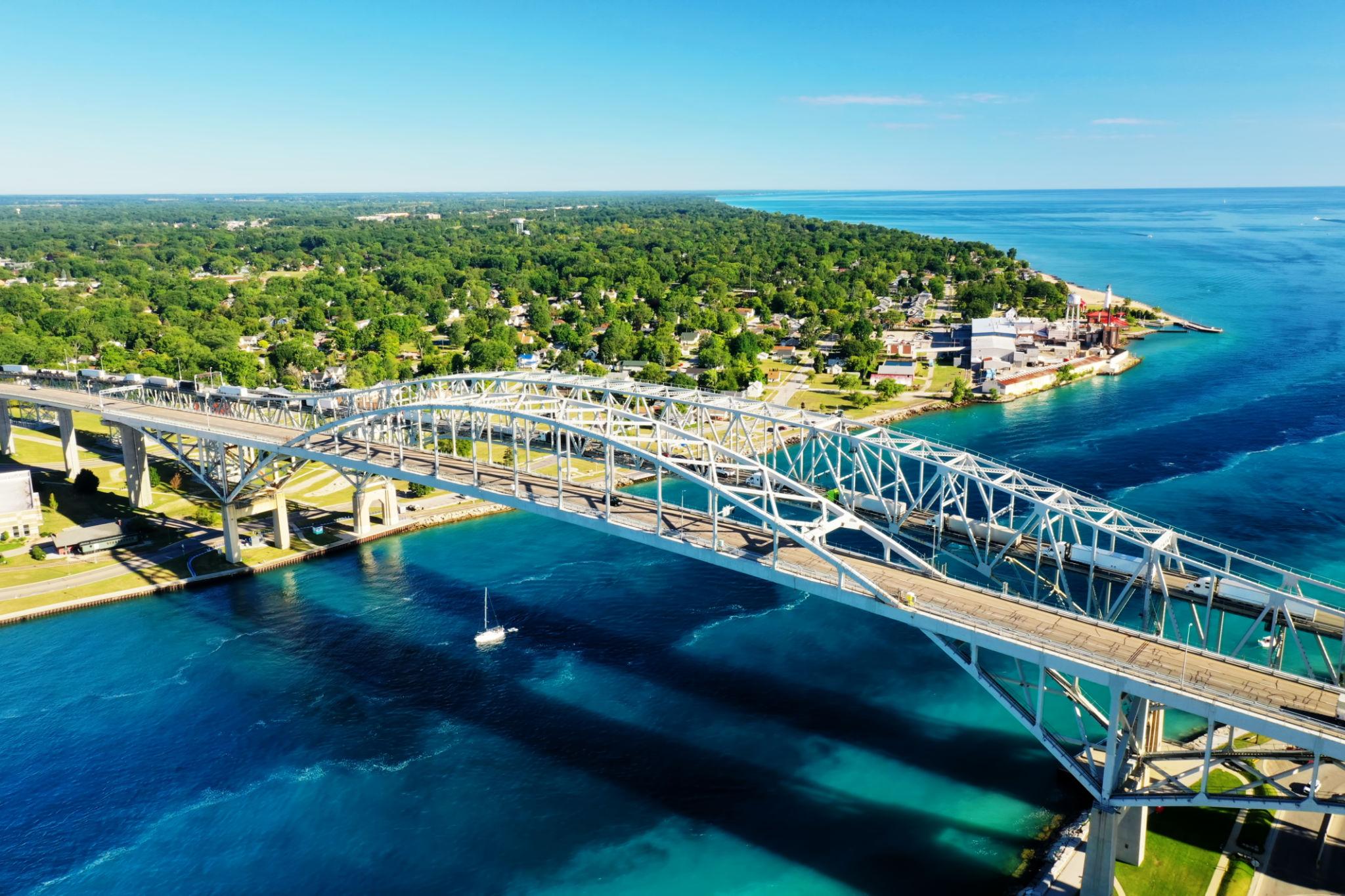
The Blue Water Bridge influences industrial and logistics values beyond mere distance. Exchange rates, customs processing times, and trucking demand swell and recede. When cross‑border traffic tightens, certain users prize Lambton County locations that shave time off runs into Michigan and beyond. That shows up in lower vacancy and firmer rents for well‑located warehouses and yards. The reverse is also true in softer periods.
Medical, research, and energy‑adjacent enterprises also move with corporate decisions upriver and across the bridge. Appraisers watch announced capital projects, plant expansions, or closures. Even when they do not immediately change a specific property’s income, they alter buyer and lender sentiment, which then feeds into cap rates and exposure times.
Exposure time and liquidity, the market’s patience
In larger cities, a leased commercial asset may find a buyer within weeks. In Lambton County, exposure times often run longer, even for well‑located investments. A credible commercial real estate appraisal in Lambton County will state reasonable exposure and marketing periods based on verified local transactions. Longer exposure does not imply a lower value by definition, but it signals liquidity risk, which buyers price into yield. Special‑purpose assets and properties with title or environmental complexity can stretch timelines further. Owners who expect a six‑week sale on such assets end up disappointed or accepting preventable discounts.
Building a better file, how owners, brokers, and appraisers collaborate
The most accurate values come from open communication. When a broker working on a listing shares up‑to‑the‑minute leasing interest, and that interest aligns with recent executed deals, the appraiser can calibrate downtime and inducements fairly. When an owner discloses a capital plan that addresses known deficiencies, with quotes and schedules, the appraiser can translate that into reserves rather than a punitive obsolescence deduction.
On the flip side, withholding information rarely helps. If a tenant has provided notice, it will surface. If a roof leaks, a buyer will find it. Baking those facts into the value on the front end avoids a second appraisal and a delayed closing or refinance. Good commercial appraisal services in Lambton County prize candor because it leads to defensible numbers that withstand lender review and purchaser diligence.
Where the rubber hits the road, reconciling to a final value
After all the modeling and verification, reconciliation is where experience shows. A skilled commercial appraiser in Lambton County explains why one approach carries more weight than another for the subject. If the income approach relies on tight, recent local leases and the direct comparison set leans on older or out‑of‑area sales, it is reasonable to privilege income. If special‑purpose improvements dominate and environmental stigma clouds market behavior, the cost approach, properly adjusted for obsolescence, may take the lead.
The final value is a point on a spectrum, not a mathematical certainty. Appraisers will often express a value conclusion coupled with a commentary on sensitivity, how the figure would move if the cap rate widened by 25 basis points, or if market rent drifted 50 cents per square foot. That context equips owners and lenders to make better decisions.
A closing perspective from the county
Lambton County’s commercial landscape does not behave like a big‑city market, and that is a feature, not a flaw. The data sets are smaller, but the signals are often clearer if you know where to look. A well‑located, functional industrial building with responsible environmental documentation and sensible power will find a tenant and hold value. A retail site with true access and a tenant mix tied to daily needs will outperform fads. Older assets with charm can create value when repositioned with realistic budgets and respect for local demand.
If you are planning a refinance, acquisition, or estate decision, pull your records, talk to your broker, and hire an appraiser who works this ground. Commercial building appraisal in Lambton County is not a copy‑paste exercise. It is a craft rooted in local economics, provincial regulation, and real cash flow. When the analysis respects that, the numbers tend to hold up, and the deals that matter, close.